
When traveling to Phan Thiet, most visitors envision endless stretches of golden sand dunes and pristine, sun-drenched beaches. While these natural wonders are unmissable, Phan Thiet holds a deeper, more profound story within its city limits. Beyond the coast lies Duc Thanh School, a seminal historical site inextricably linked to the life of Ho Chi Minh, the founding father of modern Vietnam. It was here that a young revolutionary, then known as teacher Nguyen Tat Thanh, taught and inspired a generation before embarking on his legendary journey to seek independence for his nation.
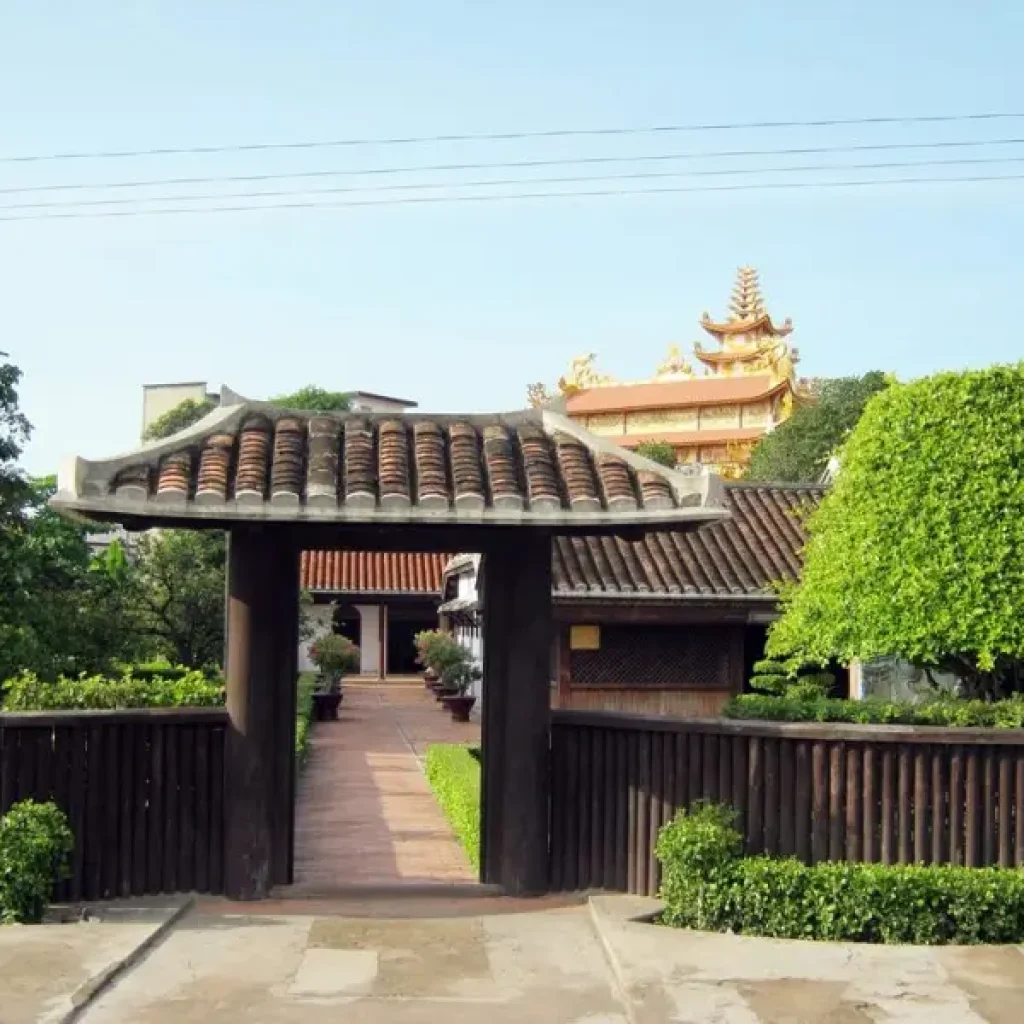
Duc Thanh School: The Pride of Phan Thiet and Binh Thuan
Established in 1907, Duc Thanh School (originally named Duc Thanh Hoc Hieu) is located at No. 39 Trung Nhi Street, Duc Nghia Ward, right on the scenic banks of the Ca Ty River.
The school was founded by patriotic Vietnamese scholars and intellectuals responding to the Duy Tan (Modernization) Movement, which championed education as a means to national awakening. Remarkably for its time, the school was funded by patriotic local business owners and the famous Lien Thanh Trading Company. Thanks to this generous patronage, all students who attended Duc Thanh received their education free of charge.
At the beginning of the 20th century, Duc Thanh was renowned as a progressive and prestigious institution. It welcomed a diverse body of roughly 100 students from various regions, including Saigon, Hoi An, and Da Nang, representing both patriotic scholars and the children of poor workers.
For locals, this is not just an old school; it is regarded as the cradle of patriotism and a dedication to learning in the region. Today, it stands as a revered national historical site, drawing both domestic and international visitors wishing to understand the historical roots of contemporary Vietnam.
How to Get to Duc Thanh School
For international travelers flying into Northern or Central Vietnam, the most convenient route is to fly into Ho Chi Minh City (Saigon). From there, you can travel to Binh Thuan province by road or train.
- Flights to Saigon: Roughly 2 hours 30 minutes from Hanoi.
- Travel to Binh Thuan: Approximately 2 hours 30 minutes to 3 hours via the new expressway or traditional road from Ho Chi Minh City.
Duc Thanh School is located roughly 24km from the exact geographical center of Phan Thiet City, but it is right within the urban core of the Duc Nghia ward, making it very accessible.
- Taxi/Private Car: The most convenient and comfortable option.
- Motorbike: For adventurous souls exploring the city, renting a motorbike is a great option.
- Route Note: From the city center, cross the Ca Ty River via Le Hong Phong Bridge. After descending the bridge, turn right onto Trung Nhi Street, and the school is immediately visible.
What Makes Duc Thanh School a Must-Visit Site?
1. Explore Century-Old Architecture
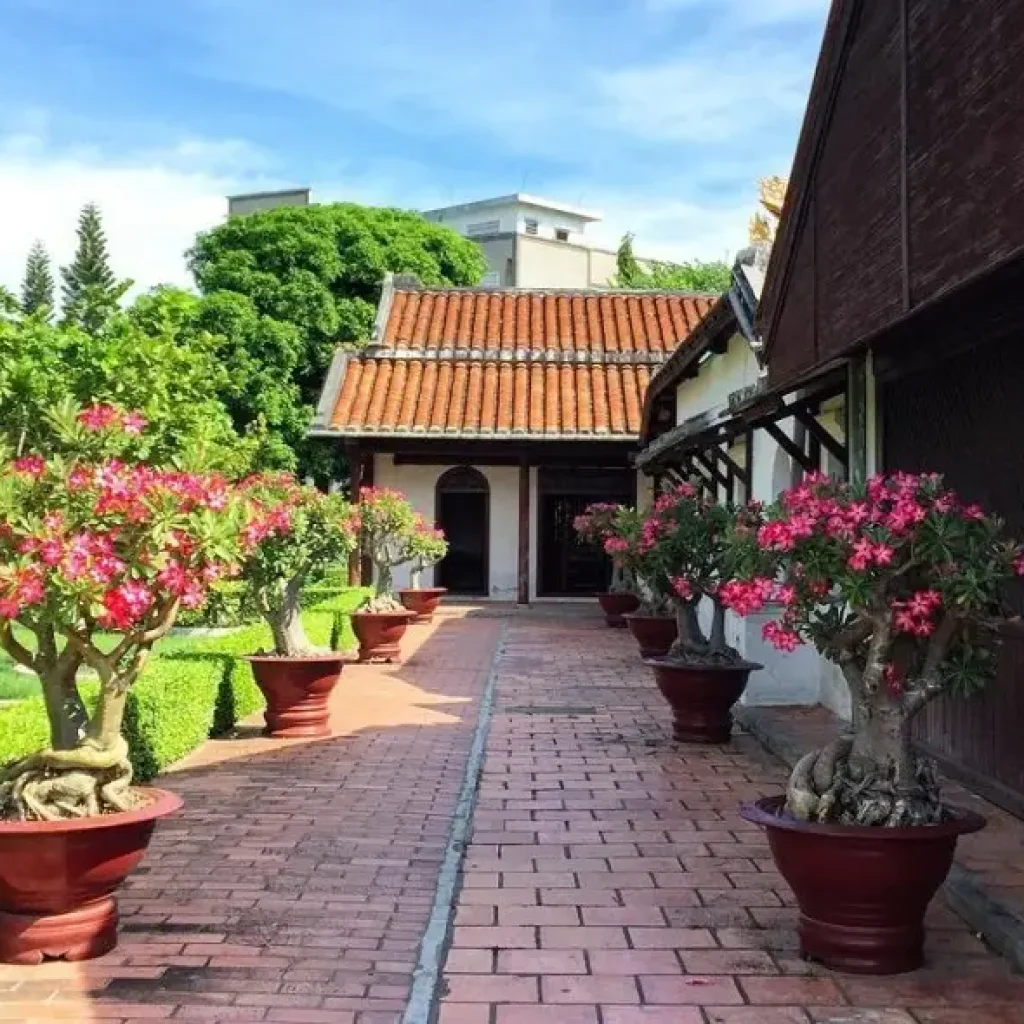
Despite the tumultuous passage of history, the architecture of Duc Thanh School remains almost perfectly preserved. As you approach, you are immediately greeted by the sight of ancient, moss-covered tiled roofs set against the peaceful backdrop of the Ca Ty River. The original wooden gate stands preserved, inviting you to step back a century into Vietnam’s past.
The school compound features beautifully manicured gardens and landscapes. A walk through the grounds reveals a functional layout of two large wooden buildings and a small two-story structure.
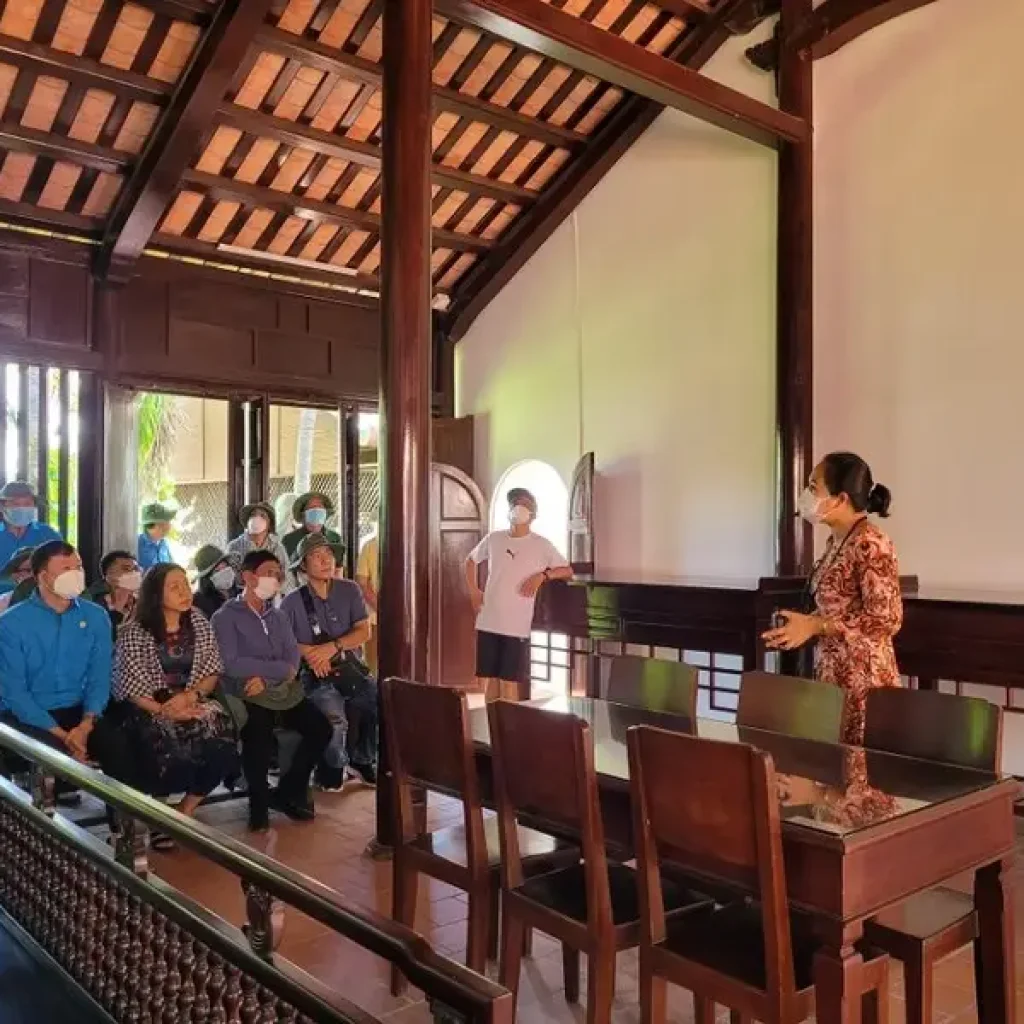
- The Main Classrooms: The two large wooden buildings served as classrooms. Inside, you can still see the two blackboards at the front and rows of antique wooden benches and desks where students once sat.
- The Fishery House (Nha Ngu): Located to the right of the classrooms, this structure was built in 1906. Initially, it was used by the host family (the Nguyen Thong family) to store fishing gear. In 1907, with the founding of the school, it was repurposed as a dormitory for teachers and students traveling from distant provinces. Significantly, this is where Nguyen Tat Thanh (Ho Chi Minh) lived during his time teaching here.
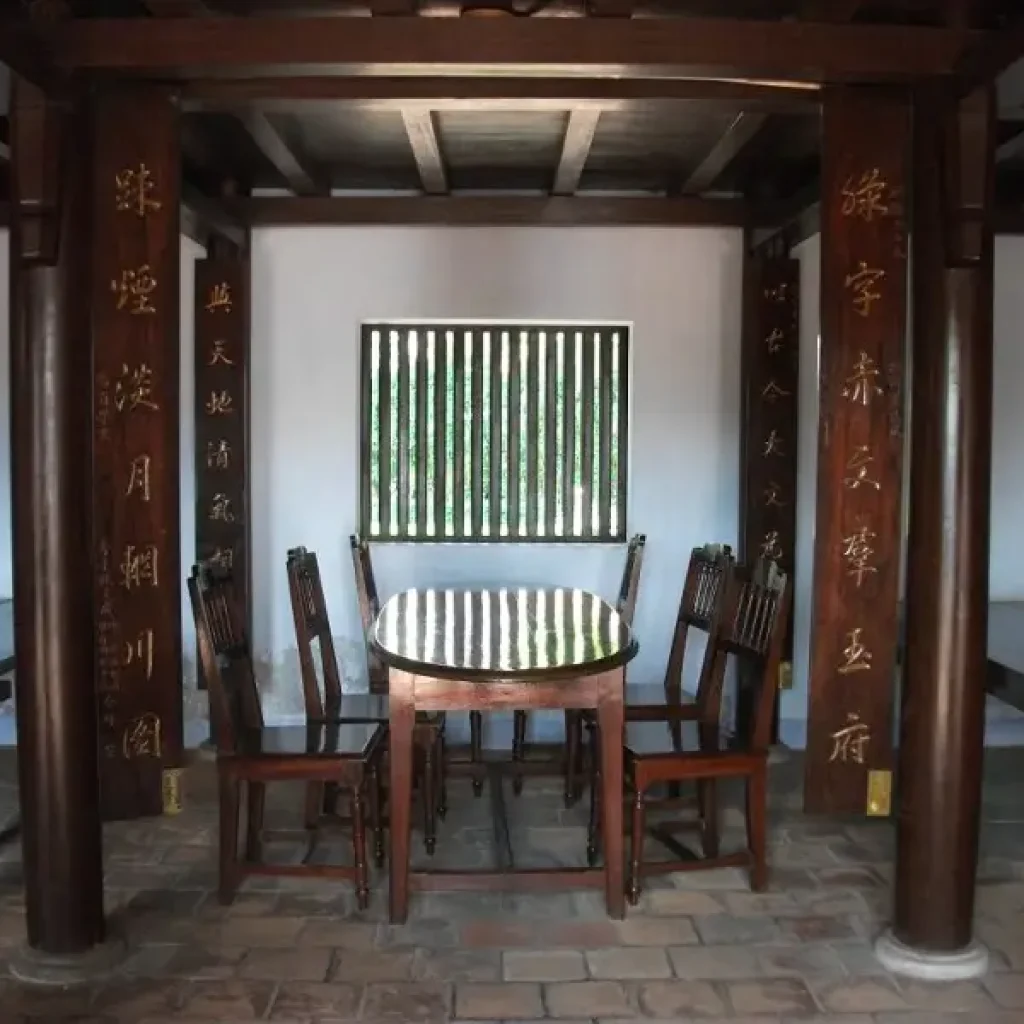
- The Lounge (Ngoa Du Sao): Situated behind the main classrooms, this building served as a meeting place, reception area, and a space for teachers and patriotic scholars to discuss literature, poetry, and national affairs. The antique wooden furniture in this area remains nearly intact.
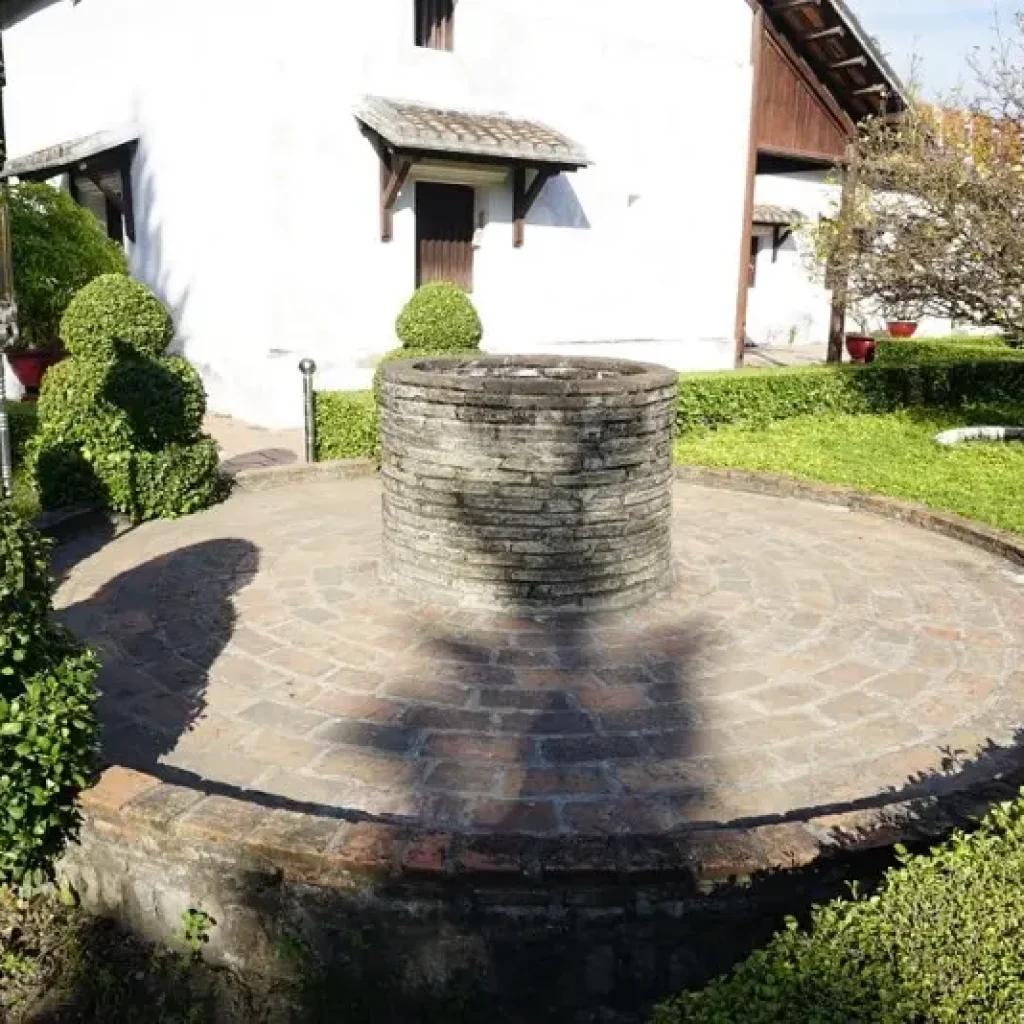
Don’t miss the old brick-lined well behind the Lounge, which still holds clear water today. Nearby is a century-old carambola (star fruit) tree, planted by the scholar Nguyen Thong, which remains lush and fruitful throughout the year.
2. Trace the Footsteps of Ho Chi Minh’s Early Life
In 1910, Duc Thanh School was a vibrant hub for the brightest, most progressive minds of the era. It was here that a 20-year-old Nguyen Tat Thanh (before he took the name Ho Chi Minh) came to teach, recommended by a friend of his father. Though he was the youngest teacher there, his impact was profound.
Teacher Thanh was responsible for teaching Vietnamese literature and classical Chinese script, but he also enthusiastically taught physical education. When necessary, he would even fill in as the French language teacher. More than just teaching academics, he infused his lessons with a deep love for the homeland. During extracurricular hours, he often led his students on tours to explore the scenic beauties of Phan Thiet.
In February 1911, teacher Thanh left Duc Thanh School for Saigon, setting the stage for his eventual journey to Europe. Inside the diorama and preservation halls, deeply revered artifacts from his time there are on display: the simple wooden planks he slept on, the standing wardrobe that held his few personal belongings, his inkwell, and his water glass. These personal items offer an intimate look into the modest life of the man who would shape Vietnam’s destiny.
Opening Hours and Entrance Fees
- Opening Hours: 7:00 AM – 5:00 PM (Daily).
- Entrance Fee: The historical site is free to enter for all visitors.
Tips for Visitors: International tourists traveling in groups are recommended to contact the Ho Chi Minh Museum office (located within the compound) to hire a guide. Local guides are intimately familiar with the history and hold many interesting, lesser-known stories regarding the school and Ho Chi Minh’s time there. Guides can significantly enrich the visiting experience.
Important Visitor Etiquette
Duc Thanh is not just a tourist site; it is a revered historical monument. Please observe the following customs:
- Dress Code: Dress respectfully and modestly. Please ensure shoulders and knees are covered as a sign of respect.
- Conduct: Walk gently and speak quietly. Avoid making loud noises.
- Preservation: Do not touch, move, or write on any of the antique furniture or artifacts within the buildings.
- Gardens: Help maintain the beautiful compound. Do not walk on the grass, pick flowers, or litter.
Source @Traveloka

Comment (0)