
While Phan Thiet is famous for its breathtaking coastlines and massive sand dunes, a short journey inland reveals a captivating story of faith, artistry, and a forgotten kingdom. Perched atop Ba Nai Hill in the Phu Hai ward, the Poshanu Cham Towers stand as silent sentinels, guarding the essence of the ancient Champa Kingdom’s cultural and spiritual legacy.
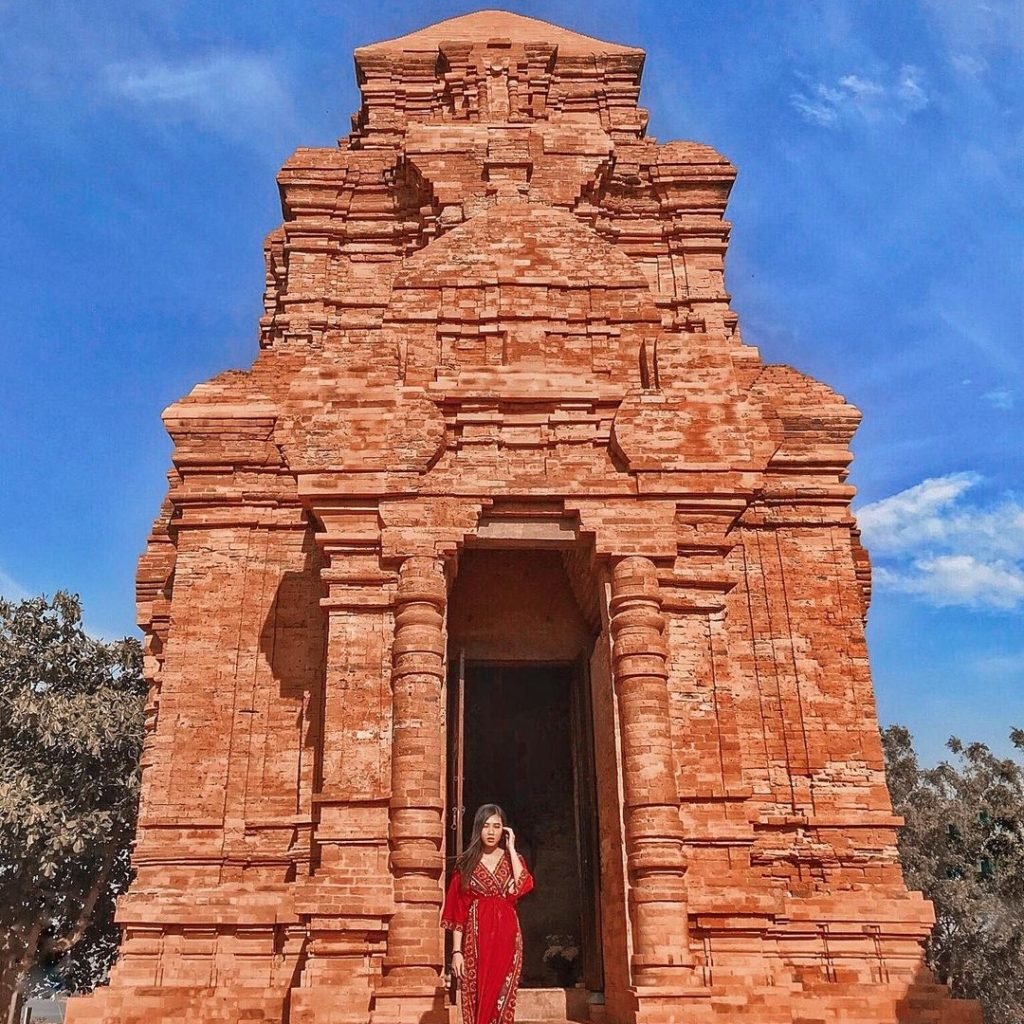
Built during the apogee of the Champa Kingdom, these towers are a must-visit destination for travelers seeking to discover the artistic brilliance and mystical atmosphere of Vietnam’s indigenous Cham people.
A Beacon of Champa’s Golden Age
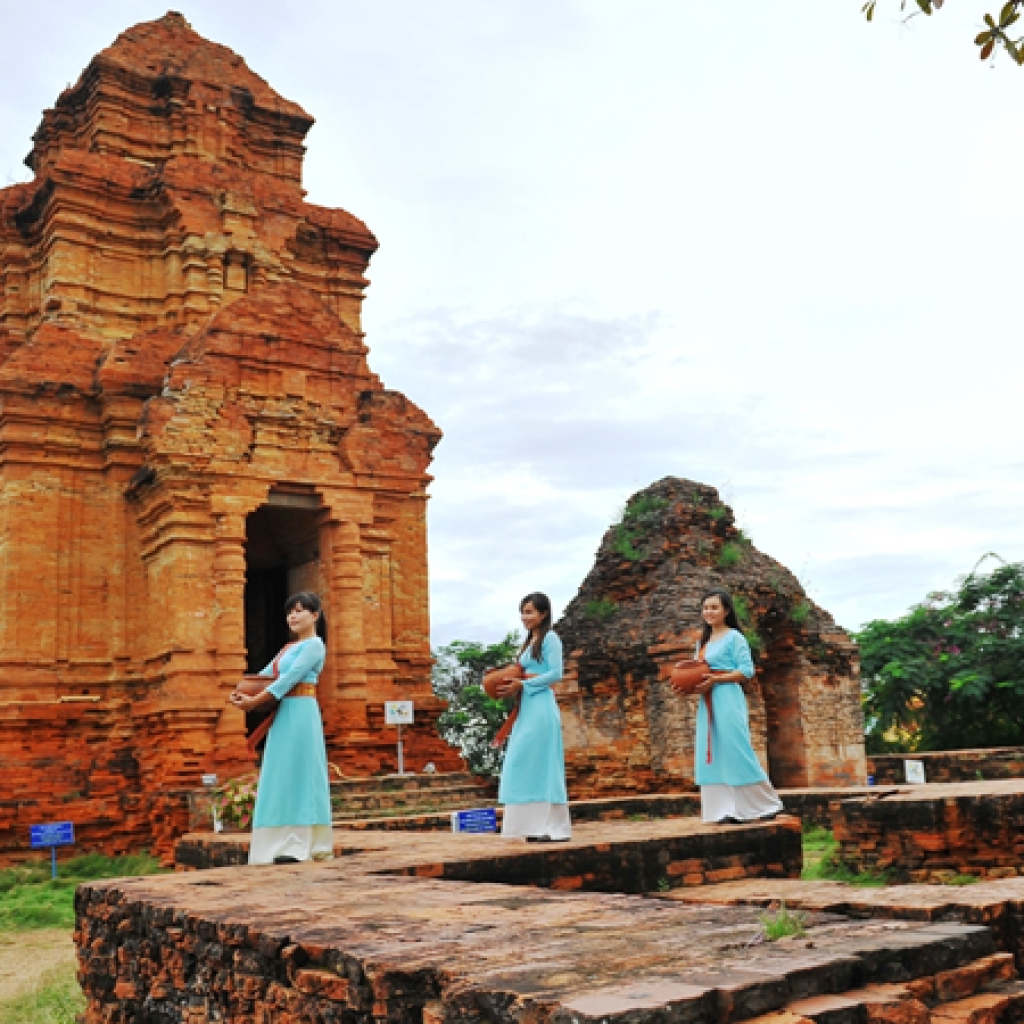
The Poshanu Cham Towers, locally also known as the Pho Hai Towers, were constructed in the 9th century, belonging to the Hoa Lai architectural style. This style represents one of the most significant and early artistic periods of Champa art. When first completed, the complex was considered a symbol of the majesty and cultural advancement of the entire Champa Kingdom.
Today, Poshanu is celebrated as one of the most well-preserved Cham tower complexes in Vietnam. In recognition of its unique architectural lines and immense historical value, Vietnam’s Ministry of Culture classified Poshanu as a National Heritage Site of Art and Architecture in 1991. Walking through the complex offers visitors a rare, preserved snapshot of Champa’s most prosperous era.
Initially constructed as a sanctuary dedicated to the Hindu deity Shiva, the site later evolved. Around the 14th century, the Cham people expanded the complex to include a shrine for Princess Poshanu, the beloved daughter of King Po Parachanh.
While the physical scale of the Poshanu towers might seem modest compared to other Cham complexes like My Son Sanctuary, their cultural density is profound. The site encapsulates the essence of Cham ingenuity—specifically their specialized architectural techniques and mystical decorative arts that created structures of timeless mystery.
The Architecture of Mysticism: A Blueprint of Ancient Faith
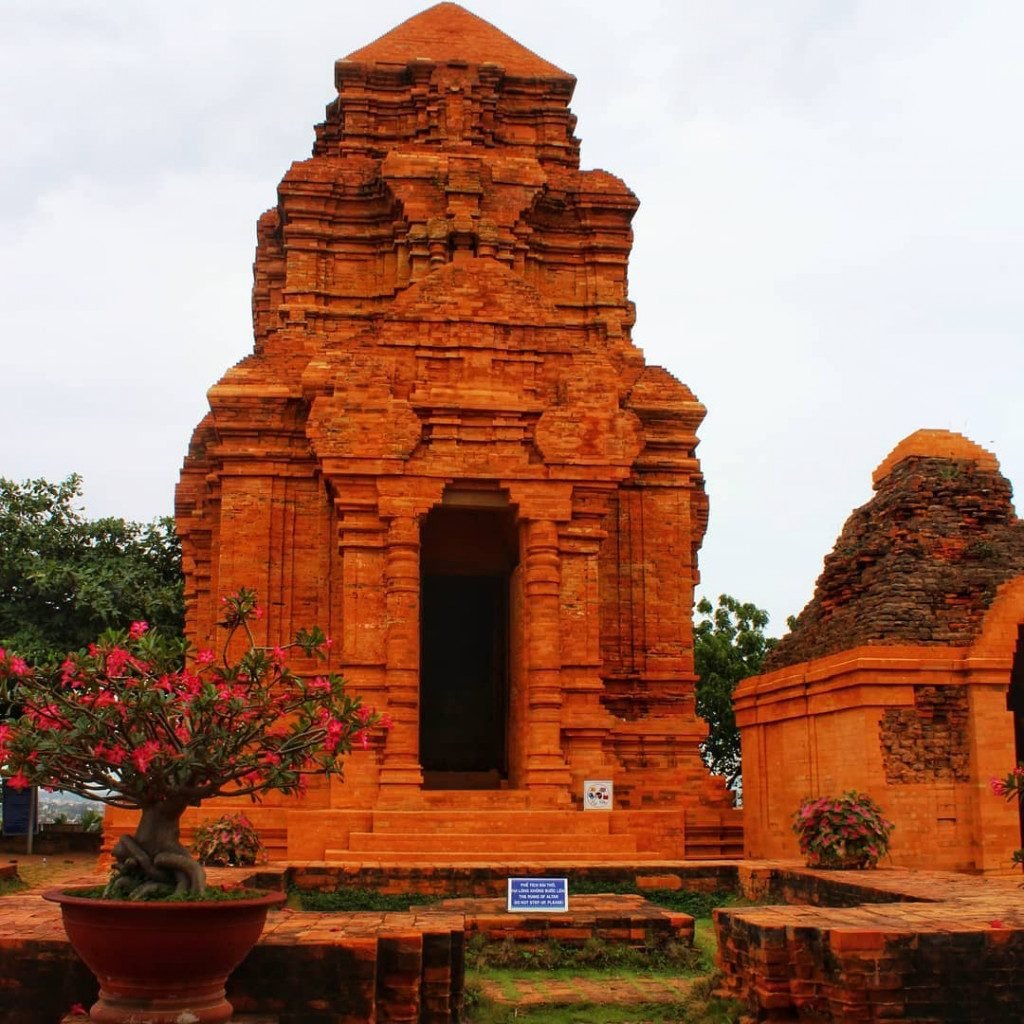
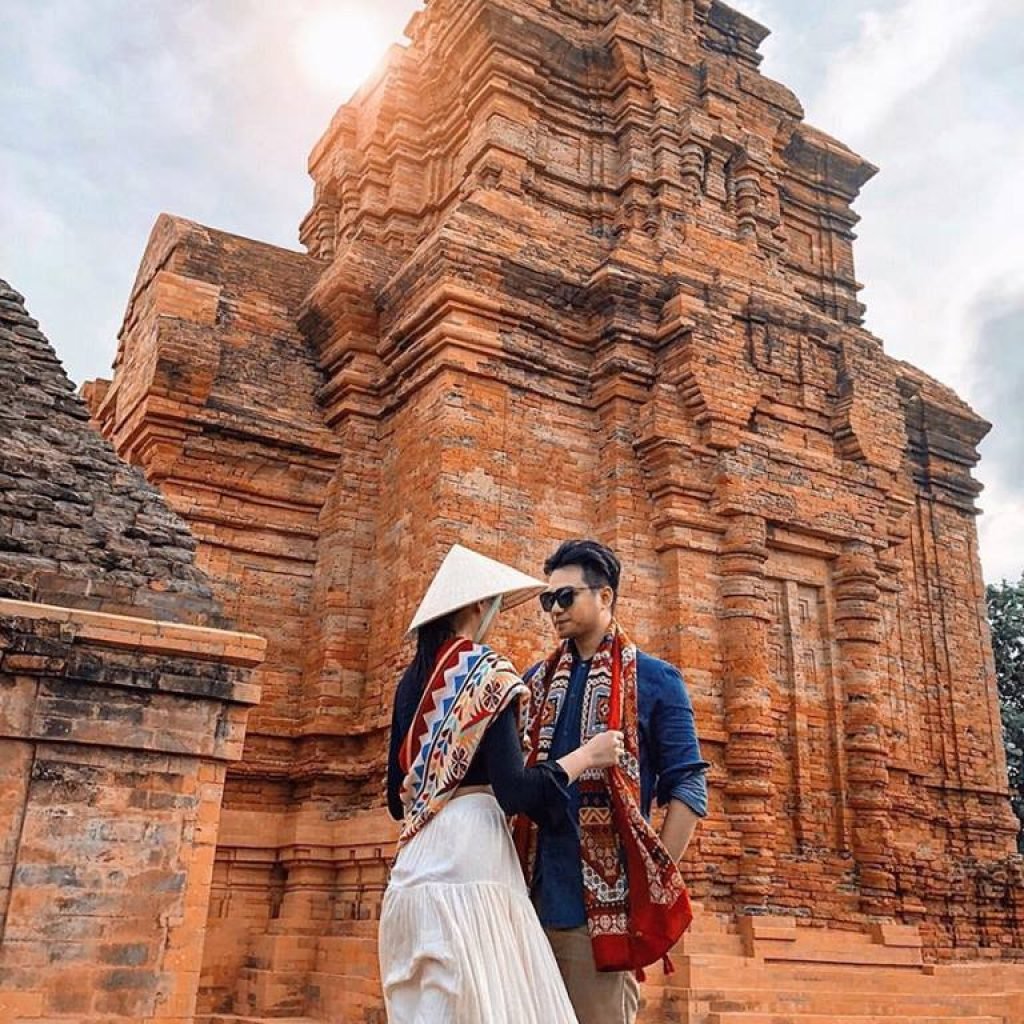
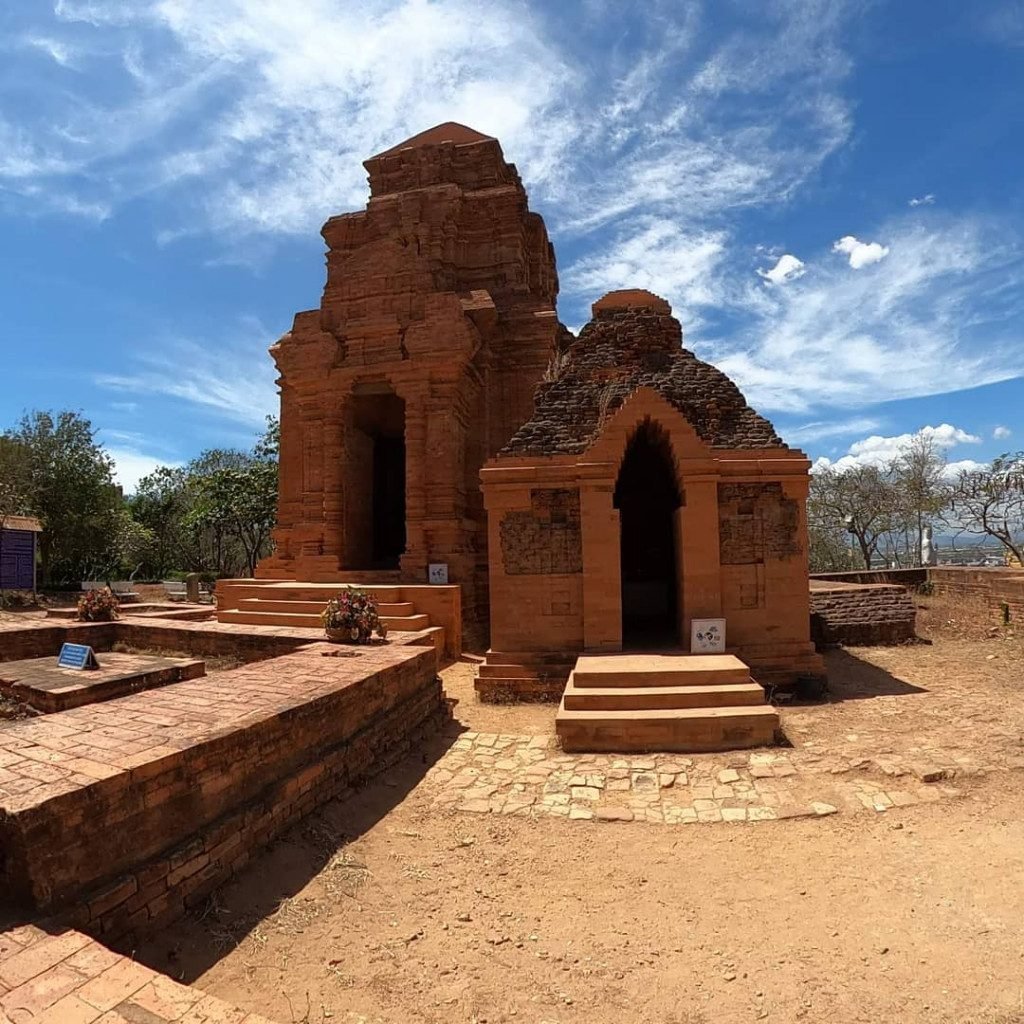
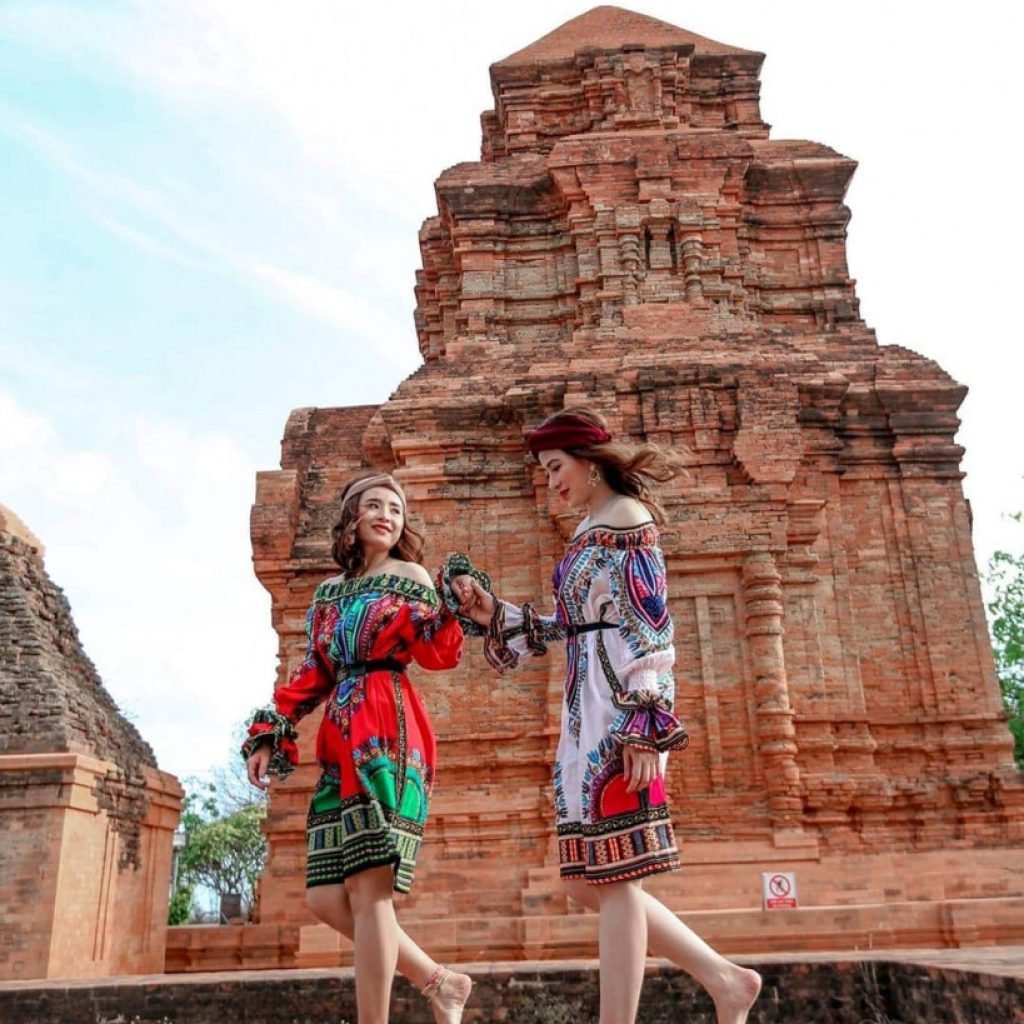
The signature look of Poshanu is achieved using standard red Champa brick, seamlessly bonded by a mysterious, long-lost adhesive of organic origin. The design features arched, dome-like doorways and a square footprint. As the towers rise, they narrow dramatically, their surfaces intricately carved with unique symbolic patterns that seem to defy centuries of weathering.
The current complex consists of one main tower and two smaller ancillary towers, all designed in the classic multi-tiered square-tower style. Traces within the area suggest that many other towers once existed here but have collapsed into ruins over time.
1. Main Tower (Tower A): The Heart of Shiva
The tallest structure, Tower A, stands 15 meters high and comprises three levels. Its main entrance faces East, as ancient Cham people believed this was the realm of the deities. The other three sides feature decorative “false” doors. Inside this sacred space, you will find the Linga and Yoni—the quintessential symbols of energy and fertility—carved from solid, dark blue-black stone.
2. Ancillary Tower (Tower C): Shrine of the Fire God
Standing directly beside the main tower is Tower C, the smallest of the trio, rising just over 4 meters. This sanctuary is dedicated to the Hindu deity Agni, the God of Fire.
3. Ancillary Tower (Tower B): The Mount of Shiva
The farthest tower from the main complex is Tower B, which stands approximately 12 meters tall. This tower is dedicated to Nandi, the sacred bull that serves as the mount of Shiva. Tower B shares a similar multi-tiered square form with the main tower but is significantly simpler in its design and decoration.
The Legend of Princess Poshanu: A Tale of Love and Betrayal
A visit to the towers is incomplete without hearing the heartbreaking story of Princess Poshanu, which is woven into the very fabric of the site.
According to local legend, the school’s historical naming commemorates Princess Poshanu and her profoundly happy yet tragic marriage to Lord Po Sahaniempar, who ruled the area of present-day Ma Lam. Their union faced significant obstacles due to their differing religious beliefs (she was Hindu, he was Muslim), yet the Princess chose love, and they married amidst the celebration of her people.
Their happiness was short-lived. A malicious scheme hatched by the Princess’s own brother, who resented her marriage outside their clan, sought to divide them. He manipulated events so that when Po Sahaniempar returned from a pilgrimage, his wife was not waiting to greet him as promised. Mistaking her absent presence as a betrayal, he abandoned his home in grief and traveled far South.
Devastated, Princess Poshanu embarked on a long, arduous journey to find her husband and explain. She finally tracked him to Mountain Ong (Tinh Linh), only to discover that the heartbroken Lord had already fallen in love with another woman from the Raglay minority ethnic group. Resigning herself to fate, Princess Poshanu spent the remainder of her days living in peaceful solitude in Bianneh.
To honor her tragic story and her immense contributions—teaching locals how to farm, cultivate cotton, weave fabric, and introduce refined codes of social etiquette—the Cham people carved her statue and placed it within the towers for eternal veneration.
Today: A Living Heritage Site
The Poshanu Cham Towers remain the spiritual heart of the local Cham community. Major annual festivals, including the magnificent Kate Festival, are still performed here. Throughout the year, the towers are a sanctuary of peace, welcoming travelers from Vietnam and around the world who come to pray for peace, understand the mystical history, and honor the rich legacy of the ancient Champa civilization.
Tips for International Visitors
Guided Tours: Hiring a guide at the entrance is highly recommended to appreciate the deeper architectural symbology and the nuances of the Princess Poshanu legend. Guides are usually available and have extensive knowledge.
Respectful Dress: As Poshanu is an active place of worship, please ensure your dress code covers shoulders and knees when entering the towers.
Conduct: Maintain a respectful quiet within the sanctuary spaces.
Best Time to Visit: Morning or late afternoon to avoid the midday sun and experience the towers bathed in a golden light. Early October provides a chance to witness the spectacular Kate Festival.
Getting There: The towers are a short, easily accessible taxi ride from central Phan Thiet. Many tours from Mui Ne include a stop here. Do not miss Ba Nai Hill for its historic French-era bunkers located just adjacent to the Cham towers.

Comment (0)